
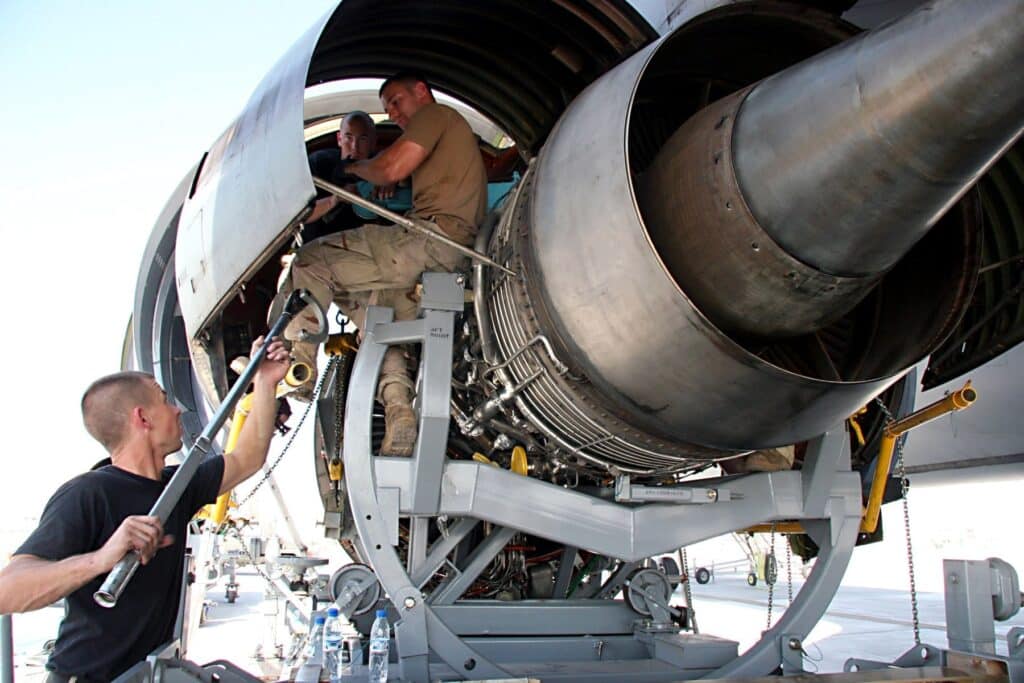
Behind every flawless engine test or smooth takeoff is a network of carefully calibrated tools. These tools ensure every part meets tight tolerances, because in aerospace, even a small deviation can have big consequences. When calibration is overlooked, it’s not just performance that’s affected, it’s the people who rely on that performance.
Here are 10 essential instruments used in jet engine manufacturing, and how proper calibration helps protect passengers, crews, and reputations.
Torque Wrenches
Purpose: Tighten fasteners to precise torque specifications
Risk: Loose or overtightened bolts can compromise structural integrity
Why It Matters: Accurate torque ensures that every connection holds strong, even under the intense forces of flight—contributing to long-term reliability and safety.
Micrometers & Calipers
Purpose: Measure turbine blades, shafts, and critical clearances
Risk: Small dimensional errors can affect engine balance
Why It Matters: Calibrated measuring tools help ensure smooth operation and reduce stress on rotating parts—extending part life and maintaining peak performance.
Temperature Sensors / Thermocouples
Purpose: Control heat treatment of engine components
Risk: Incorrect thermal processing weakens material strength
Why It Matters: Calibrated sensors ensure that metals are treated correctly, preserving the durability and fatigue resistance needed to withstand repeated high-stress cycles.
Coordinate Measuring Machines (CMMs)
Purpose: Validate the shape and geometry of complex parts
Risk: Missed deviations allow flawed parts into final assembly
Why It Matters: Properly calibrated CMMs help verify that every part fits perfectly, ensuring engine components work together as designed—without unexpected vibration or wear.
Pressure Gauges
Purpose: Monitor pressure in fuel, hydraulic, and test systems
Risk: Pressure issues can lead to leaks or underperformance
Why It Matters: Precision pressure monitoring helps teams catch issues before they escalate, keeping systems safe and within spec during testing and operation.
Multimeters
Purpose: Test voltage, continuity, and electrical system integrity
Risk: Electrical faults can go undetected
Why It Matters: Calibrated multimeters ensure accurate diagnosis of electrical systems, which play a key role in engine control and safety.
Laser Alignment Tools
Purpose: Align rotating shafts and assemblies
Risk: Misalignment leads to vibration and accelerated wear
Why It Matters: Proper alignment extends engine life and reduces the risk of component failure, supporting smoother, quieter, and more reliable operation.
Surface Roughness Testers
Purpose: Measure finish quality on airflow-critical parts
Risk: Rough surfaces reduce engine efficiency
Why It Matters: Calibrated testers ensure that surface finishes meet design specs, improving airflow and thermal management—essential for maintaining performance in extreme conditions.
Mass Flow Meters
Purpose: Measure fuel and air flow rates
Risk: Incorrect flow rates impact engine calibration and emissions
Why It Matters: Accurate flow measurements help engineers fine-tune combustion, reducing emissions and optimizing engine response under various loads.
Balancing Machines
Purpose: Balance rotating parts like fans and turbines
Risk: Unbalanced parts increase vibration and stress
Why It Matters: Balanced assemblies minimize wear and noise, creating a safer, more comfortable experience for everyone on board.
Trust SIMCO for Life-Saving Precision
At SIMCO, we’ve provided high-quality calibration services to over 3,000 organizations—including 9 of the top 10 U.S. aerospace and defense manufacturers.
If your operations depend on precision, let’s talk.