
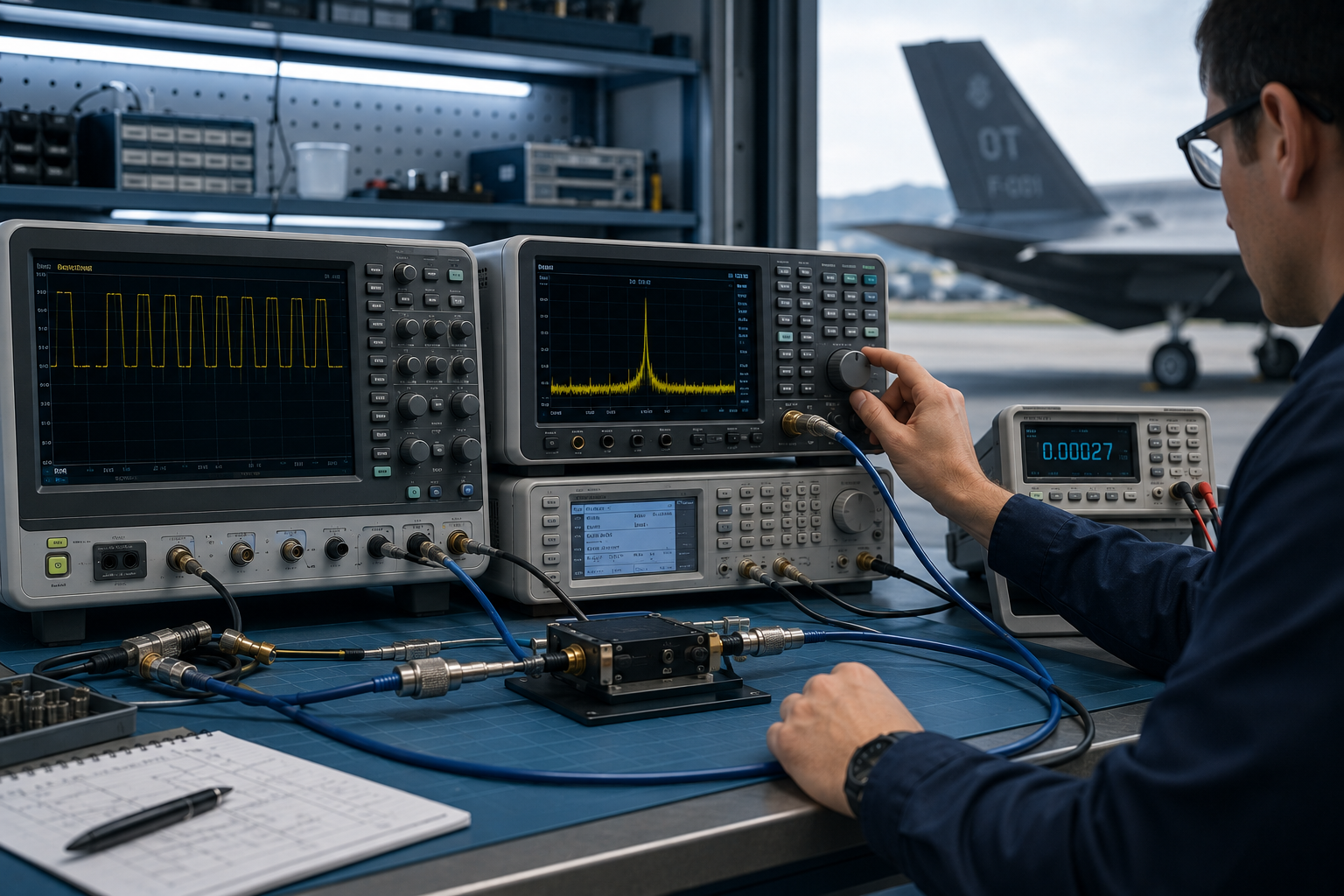
1. Introduction: Trusted Measurements Support Mission Readiness
Modern defense systems rely on complex electronics to support communications, navigation, radar, electronic warfare, and weapons platforms. To keep these systems operating as intended, maintenance teams depend on accurate measurement data.
Test equipment is used throughout the lifecycle of defense electronics to troubleshoot problems, perform maintenance, verify repairs, and monitor performance. If measurement results cannot be trusted, maintenance decisions become more difficult and operational risk can increase.
Calibration helps organizations understand the measurement performance of their instruments. During calibration, an instrument’s measurements are compared to known reference standards, providing traceable information about its measurement performance. Over time, equipment can drift due to age, use, and environmental conditions. Without regular calibration, organizations may not know whether measurement results can be trusted when making maintenance or operational decisions.
In mission-critical environments, confidence in measurement data is essential. Calibration helps provide the information needed to make informed decisions and support mission readiness.
Key Takeaways
- Defense electronics require accurate and reliable measurement data to support maintenance and operational readiness.
- Calibration compares measurements to known standards and provides traceable measurement data.
- Equipment performance can change over time due to aging, use, and environmental conditions.
- Calibration data can help organizations identify drift and performance changes before they affect operations.
- Accurate test equipment is critical for maintaining and troubleshooting defense systems.
- Regular calibration improves confidence in measurement results and supports mission readiness.
2. Why Calibration Is Critical for Defense Electronics Test Equipment
Defense systems often operate in demanding environments where performance and reliability are essential. Maintenance teams must be able to trust the measurements used to evaluate system health and performance.
Calibration provides information about how an instrument’s measurements compare to known standards. This information helps organizations understand measurement error, associated uncertainty, and maintain traceability to recognized references.
Without calibration, changes in instrument performance may go unnoticed. As equipment drifts over time, measurement results can become less reliable, increasing the risk of poor maintenance decisions.
Reducing Mission Risk
Military operations depend on equipment performing as expected. Maintenance personnel use measurement data to determine whether systems are functioning properly and whether repairs have been successful.
For example:
- A communications system may appear to operate normally even though a key performance parameter has shifted outside its intended range.
- A radar component may be removed unnecessarily because inaccurate measurements suggest a problem where none exists.
- Troubleshooting efforts may take longer when measurement results are inconsistent or unreliable.
Calibration helps reduce these risks by providing confidence in the measurement data used to support maintenance and operational decisions.
Supporting Mission Readiness
Mission readiness depends on equipment being available and functioning properly when needed.
Reliable measurement data helps maintenance teams:
- Detect problems sooner.
- Troubleshoot more effectively.
- Confirm repair effectiveness with confidence.
- Reduce unnecessary maintenance actions.
- Return systems to service more efficiently.
When measurement data is trustworthy, organizations can make better decisions that support readiness and reliability.
3. Common Challenges Affecting Defense Electronics
Several factors can affect the performance of electronic equipment and the instruments used to test it.
Environmental Conditions
Defense equipment may be exposed to extreme temperatures, humidity, vibration, shock, and electromagnetic interference. These conditions can affect electronic performance and contribute to measurement drift over time.
Component Aging
Electronic components naturally change as they age. Small changes may not be immediately noticeable but can eventually affect measurement performance.
Heavy Usage
Instruments used frequently in demanding environments may experience wear that affects measurement reliability.
Complex Electronic Systems
Modern defense platforms use advanced RF, microwave, digital, and sensor technologies. These systems often require highly accurate measurements and specialized calibration capabilities.
4. Standards and Traceability Requirements
Calibration supports both equipment performance and quality system requirements.
Organizations responsible for defense electronics often require measurement traceability to recognized standards to ensure consistency and confidence in measurement results.
ISO/IEC 17025
ISO/IEC 17025 is the international standard used to assess the competence of calibration and testing laboratories.
Accredited laboratories must demonstrate technical competence, maintain traceability, and follow documented quality processes to produce reliable results.
Measurement Traceability (Metrological Traceability)
Measurement traceability, also known as metrological traceability, is the documented path that connects a measurement result and its associated uncertainty to recognized reference standards, such as those maintained by NIST, through an unbroken chain of calibrations.
Traceability helps ensure that measurement results are consistent, comparable, and defensible during audits, inspections, and technical reviews.
5. What to Look for in a Calibration Provider
Selecting a calibration provider involves more than finding a company that can perform a calibration.
ISO/IEC 17025 Accreditation
Accreditation demonstrates that the laboratory has been independently assessed for technical competence and quality management.
Technical Expertise
Defense electronics often include RF, microwave, communications, navigation, and electronic warfare technologies. Calibration providers should have experience working with these types of measurements.
Measurement Capability
The provider should have the standards and capabilities necessary to support the required measurement ranges and tolerances.
Documentation and Traceability
Clear calibration reports and traceability records help support maintenance programs, audits, and quality requirements.
6. Best Practices for Maintaining Defense Electronics
Strong calibration programs help organizations maintain confidence in their measurement systems.
Establish Appropriate Calibration Intervals
Calibration intervals are determined by the equipment owner based on factors such as usage, environment, risk, and historical performance.
Equipment used in harsh environments or critical applications may require more frequent calibration than equipment used under controlled conditions.
Review Calibration History
Historical calibration data can reveal trends that may indicate increasing drift or performance changes.
Maintain Complete Records
Accurate documentation supports traceability, maintenance planning, and audit readiness.
Use Accredited Calibration Services
Accredited laboratories provide traceable calibration results that support confidence in measurement data.
7. Using Calibration Data to Improve Reliability
Calibration reports contain valuable information that can support reliability and maintenance programs.
Organizations can use calibration data to:
- Monitor long-term performance trends.
- Identify equipment that is drifting over time.
- Improve maintenance planning.
- Reduce unexpected downtime.
- Support asset management decisions.
Reviewing calibration history can help organizations address potential issues before they affect system performance.
8. Conclusion: Measurement Confidence Supports Mission Success
Mission-critical defense electronics depend on reliable performance, and reliable performance depends on informed maintenance decisions. Those decisions are often based on measurement data collected using electronic test equipment.
Calibration provides traceable information about instrument performance and helps organizations maintain confidence in the measurements used to support maintenance and operational activities.
By maintaining a strong calibration program, defense organizations can improve measurement confidence, support readiness objectives, reduce risk, and help ensure that critical systems are available when they are needed most.
Frequently Asked Questions
Why is calibration important for defense electronics?
Calibration compares an instrument’s measurements to known standards and provides information about its performance. This helps organizations maintain confidence in the measurement data used for maintenance and troubleshooting.
How often should defense electronics be calibrated?
Calibration intervals are determined by the equipment owner based on factors such as usage, environment, risk, and historical performance. Calibration providers may supply historical performance data to help support those decisions.
What happens if equipment is not calibrated?
Instruments can drift over time due to age, use, and environmental conditions. Without calibration, organizations may not know whether measurement results remain reliable.
What is traceability in calibration?
Measurement traceability, also known as metrological traceability, is the documented path that connects a measurement result and its associated uncertainty to recognized reference standards, such as those maintained by NIST, through an unbroken chain of calibrations. This helps ensure that measurement results are consistent, comparable, and trustworthy.
Why should organizations use an ISO/IEC 17025 accredited laboratory?
ISO/IEC 17025 accredited laboratories have demonstrated technical competence and maintain documented processes for producing reliable and traceable calibration results.