
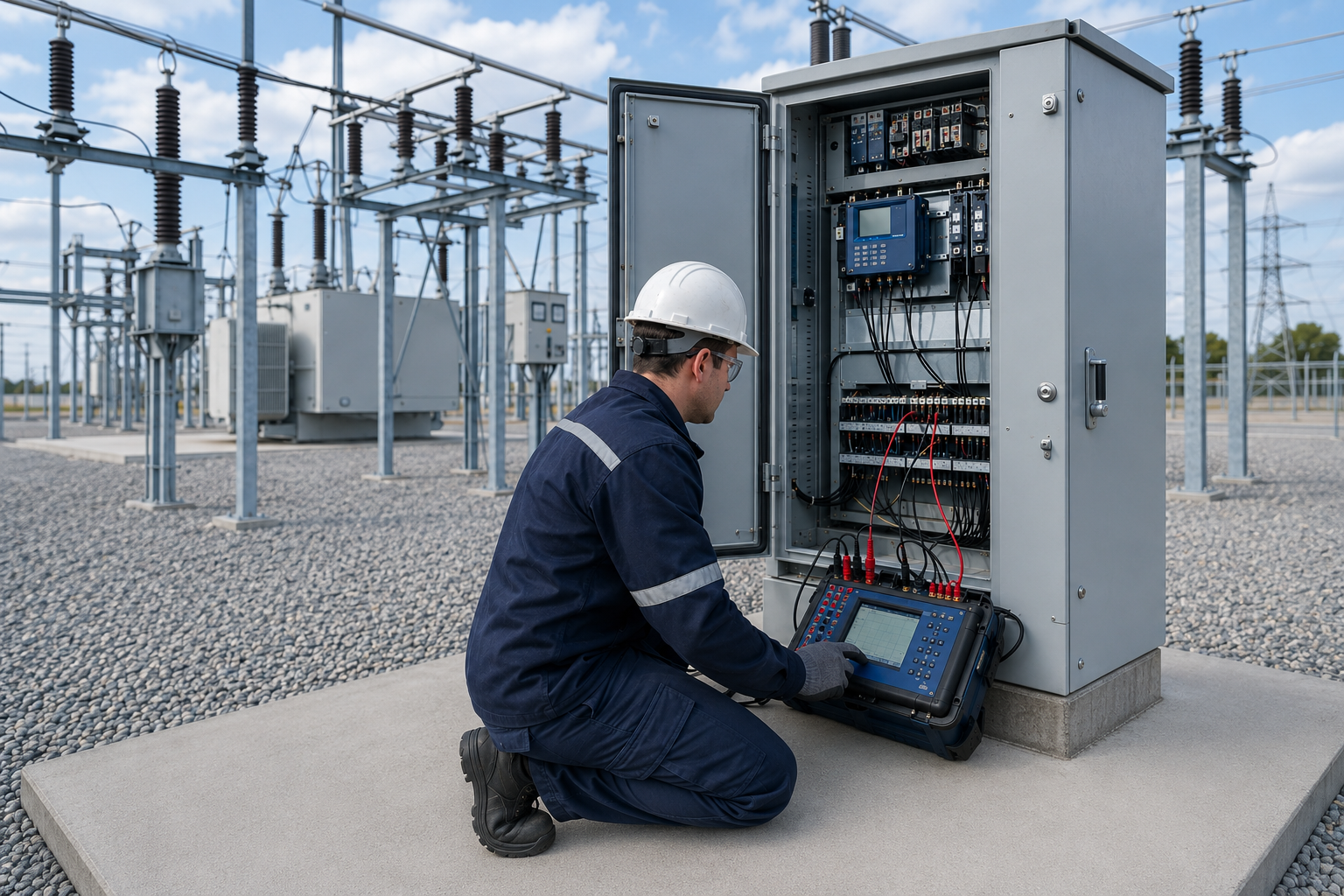
Reliable utility operations begin with reliable measurements. Every maintenance decision, equipment inspection, and troubleshooting activity depends on test instruments that provide accurate results. Whether verifying the operation of a protective relay, evaluating transformer performance, or locating a cable fault, technicians rely on accurate measurements to make informed maintenance decisions. When measurements are incorrect, even experienced technicians can reach the wrong conclusions about equipment condition.
Regular utility calibration services help verify that electrical test instruments continue to meet their performance specifications. Accurate measurements support preventive maintenance, improve worker safety, reduce unnecessary equipment replacement, and help utilities maintain reliable electrical service.
Key Takeaways
- Utility calibration services help ensure electrical test equipment provides accurate, traceable measurements for maintenance and troubleshooting.
- Calibrated instruments support worker safety, preventive maintenance, equipment reliability, and faster fault diagnosis.
- Inaccurate measurements can contribute to incorrect diagnoses, unnecessary equipment replacement, delayed repairs, and service interruptions.
- Calibration intervals should reflect instrument criticality, usage, operating conditions, historical performance, and measurement risk.
- Complete calibration records and effective asset tracking support traceability, audit readiness, and regulatory compliance.
Reliable Utility Operations Begin with Reliable Measurements
Every day, electric utilities generate, transmit, and distribute electricity through thousands of interconnected components. Transformers, circuit breakers, protective relays, switchgear, transmission lines, and distribution equipment must all operate correctly to keep power flowing safely and reliably.
Many utilities are maintaining equipment that has been in service for decades while also integrating renewable energy systems and modern grid technologies. Accurate measurements are essential for evaluating the condition of both aging and newly installed equipment.
Utility technicians use specialized test equipment to evaluate electrical systems, identify developing problems, verify repairs, and confirm that protective devices operate as intended.
These measurements may be used to evaluate transformer insulation, verify breaker timing, confirm relay operation, assess power quality, or locate faults in underground distribution systems. If an instrument produces inaccurate readings, technicians may misdiagnose equipment, overlook developing failures, or replace components that are still operating properly.
Regular electrical equipment calibration helps ensure these instruments continue to provide accurate measurements supported by metrological traceability, allowing maintenance teams to make informed decisions with confidence.
Measurement traceability means that a measurement result can be related to recognized reference standards through an unbroken chain of calibrations, typically through national metrology institutes (NMIs) such as NIST. This documented chain helps provide confidence that measurements are accurate and consistent over time.
Why Utilities Depend on Accurate Instruments
Utilities use a wide range of electrical test equipment throughout generation facilities, substations, transmission systems, distribution networks, renewable energy installations, and field service operations.
Common instruments include:
- Protective relay test sets
- Power analyzers
- Power quality analyzers
- Transformer test equipment
- Circuit breaker analyzers
- Insulation resistance testers
- Ground resistance testers
- Clamp meters
- Digital multimeters
- Phase rotation meters
- Cable fault locators
- Battery testers
Each instrument plays a different role, but they all have one thing in common: maintenance personnel depend on accurate measurements to make informed decisions.
For example, technicians may use a power analyzer to evaluate transformer performance, an insulation resistance tester to assess cable condition, a circuit breaker analyzer to verify operating times, or a protective relay test set to confirm that protective devices respond correctly during fault conditions. If any of these instruments produce inaccurate results, maintenance decisions may be delayed or based on incorrect information.
Regular calibration of utility test equipment helps ensure measurements remain reliable throughout the instrument’s service life. This allows maintenance personnel to make repair and replacement decisions with greater confidence.
Risks of Poor Calibration
Inaccurate measurements can affect maintenance activities, equipment reliability, operating costs, and worker safety. While calibration cannot prevent every equipment failure, it helps utilities reduce the risk of making decisions based on incorrect measurement data.
Incorrect Diagnostics
An inaccurate instrument may indicate a problem where none exists or fail to detect a developing equipment issue. This can make troubleshooting more difficult and increase repair time.
For example, an inaccurate insulation resistance tester may fail to identify deteriorating cable insulation, or an inaccurate circuit breaker analyzer may indicate that a breaker is operating within acceptable limits when maintenance is actually needed.
Unnecessary Equipment Replacement
Incorrect measurements may lead technicians to replace transformers, relays, breakers, or other components that are still functioning properly. This increases maintenance costs and removes equipment from service unnecessarily.
Delayed Repairs
When maintenance personnel cannot trust their measurements, identifying the true source of a problem often takes longer. Extended troubleshooting can delay repairs and increase system downtime.
Worker Safety
Utility personnel routinely work around energized equipment and high-voltage systems. Accurate electrical test equipment supports safer work practices by helping qualified personnel verify electrical conditions and protective-device performance during testing and maintenance.
For example, technicians may use calibrated meters to verify voltage levels, troubleshoot electrical systems, or confirm the operation of protective devices during testing.
Service Interruptions
Unexpected equipment failures have many causes, but inaccurate measurements can contribute to maintenance decisions that allow developing problems to go undetected. Reliable measurements help utilities identify issues earlier and restore service more efficiently when problems occur.
Utility Calibration Program Best Practices
An effective calibration for utilities program is part of a broader measurement management strategy. Rather than treating calibration as a routine administrative task, leading utilities use calibration data to support equipment reliability, maintenance planning, and regulatory compliance.
Establish Scheduled Calibration Intervals
Calibration intervals should consider manufacturer recommendations, frequency of use, operating environment, historical performance, and the consequences of inaccurate measurements. Instruments used in demanding field environments or for critical testing often require more frequent calibration.
Apply Risk-Based Calibration Intervals
Not every instrument has the same impact on utility operations. Equipment used for protective relay testing, high-voltage diagnostics, or worker safety may justify shorter calibration intervals than instruments used for less critical measurements. Periodically reviewing interval performance helps ensure calibration schedules remain appropriate as equipment ages and operating conditions change.
Evaluate Equipment After Damage or Repair
Field instruments used in substations, transmission corridors, and other outdoor environments may be exposed to temperature extremes, vibration, moisture, and frequent handling. Test equipment that has been dropped, subjected to harsh environmental conditions, repaired, modified, or produces questionable results should be evaluated before being returned to service. Depending on the circumstances, this may include functional verification or calibration. These evaluations can help identify potential measurement problems before inaccurate readings affect maintenance decisions.
Track Measurement Assets
An effective asset management system helps utilities monitor calibration due dates, identify instrument locations, maintain service histories, and reduce the likelihood of overdue equipment remaining in service.
Maintain Complete Calibration Documentation
Calibration records document that measurement equipment has been properly maintained and provide evidence of metrological traceability. Good documentation also supports internal quality systems, regulatory requirements, audits, and maintenance planning.
Building Long-Term Reliability
As utilities continue modernizing the electrical grid, preventive and predictive maintenance have become increasingly important. Rather than waiting for equipment to fail, these maintenance strategies use inspections, testing, and condition monitoring to identify developing problems before they affect system reliability. Accurate measurements are essential to making these programs effective.
Measurements are the foundation of these programs. They support condition-based maintenance by helping utilities identify changes in equipment performance before they lead to failures. Reliable test equipment helps utilities:
- Detect developing equipment problems before failure.
- Verify repairs before equipment is returned to service.
- Trend equipment performance over time.
- Prioritize maintenance activities based on actual equipment condition.
- Improve preventive and predictive maintenance programs.
- Increase confidence in maintenance and operational decisions.
As electrical infrastructure continues to age and utilities invest in grid modernization, dependable measurements become even more important. Regular electrical test equipment calibration, supported by comprehensive utility calibration services, helps ensure maintenance decisions are based on accurate, reliable measurement data, supporting reliable, safe, and efficient utility operations.
Frequently Asked Questions
Why are utility calibration services important?
Utility calibration services verify that electrical test instruments continue to provide accurate measurements with metrological traceability for maintenance, troubleshooting, testing, and the safe operation of electrical power systems.
What electrical equipment should utilities have calibrated?
Common instruments include digital multimeters, clamp meters, power analyzers, power quality analyzers, protective relay test sets, insulation resistance testers, transformer test equipment, circuit breaker analyzers, ground resistance testers, cable fault locators, and battery testers.
How often should utility test equipment be calibrated?
Calibration intervals should be based on manufacturer recommendations, frequency of use, operating environment, historical performance, and the risk associated with inaccurate measurements. Instruments supporting critical maintenance or worker safety often require more frequent calibration.
Can calibration prevent power outages?
Calibration alone cannot prevent outages. However, accurate measurements help utilities identify developing equipment problems earlier, verify repairs, and make better maintenance decisions that contribute to improved system reliability.
Why is calibration documentation important?
Calibration documentation demonstrates that measurement equipment has been properly maintained, provides evidence of metrological traceability, and supports quality systems, regulatory compliance, audits, and effective asset management.
Why choose an ISO/IEC 17025 accredited calibration laboratory?
An ISO/IEC 17025 accredited calibration laboratory has been independently assessed and found technically competent to perform the calibrations within its Scope of Accreditation. Accreditation also demonstrates compliance with internationally recognized requirements for measurement traceability, evaluation of measurement uncertainty, and quality management. Choosing an ISO/IEC 17025 accredited laboratory can provide greater confidence in the calibration results used to support utility maintenance and operational decisions.
Support More Reliable Utility Measurements
SIMCO provides ISO/IEC 17025 accredited calibration and repair services for electrical test equipment used across utility operations. Contact us to discuss your equipment requirements, service schedule, and calibration program needs.
Submit your request for calibration services here.