

What Is a Torque Transducer?
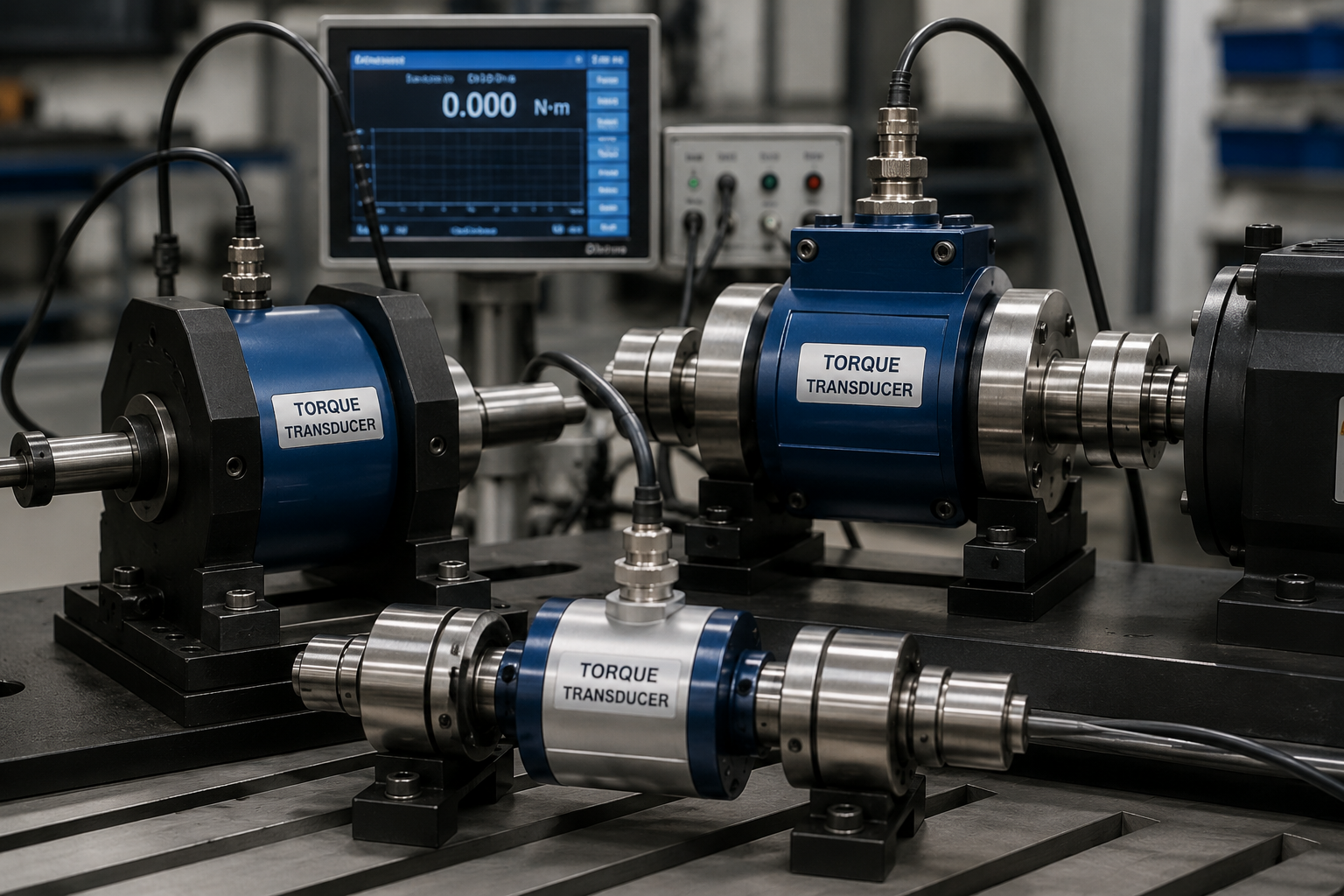 A torque transducer, sometimes called a torque sensor, is a precision measurement instrument that converts applied mechanical torque into an electrical signal. It is used to measure, monitor, and verify rotational force during product testing, equipment validation, manufacturing, calibration, and research applications.
Unlike torque wrenches, which apply torque to a fastener, torque transducers measure the torque produced by tools, motors, gearboxes, and other rotating systems. They are commonly used to verify torque output, evaluate system performance, and support calibration and testing activities.
Torque transducers are available in reaction and rotary designs and may provide analog or digital outputs for integration with automated test systems, data acquisition systems, controllers, and other measurement systems. Most torque transducers use bonded strain gages to convert the small amount of deformation that occurs when torque is applied into proportional electrical signals, although other sensing technologies are also available.
These instruments are commonly used in aerospace and defense, automotive and electric vehicle manufacturing, industrial manufacturing, research and development laboratories, calibration laboratories, and quality assurance applications. Because torque measurements often support product acceptance, equipment verification, process control, and compliance decisions, regular calibration helps confirm that measurements remain accurate, traceable, and reliable.
Common Torque Transducer Measurement Functions
SIMCO supports calibration for torque transducers with common measurement capabilities, including:
- Clockwise (CW) torque measurement
- Counterclockwise (CCW) torque measurement, where supported
- Static torque measurement
- Reaction torque measurement for stationary applications
- Rotary torque measurement for rotating equipment
- Analog output verification, where applicable
- Digital output verification, where applicable
- Multi-range torque measurement, where supported
Torque Transducer Calibration Capabilities
SIMCO provides torque transducer calibration services designed to verify measurement accuracy, identify drift, and support traceable documentation for quality and compliance programs.
Our torque transducer calibration services may include:
- Inspection of the transducer, housing, connectors, cables, mounting surfaces, and overall condition
- Functional inspection of indicators, displays, or associated readout devices, where applicable
- Verification of clockwise and counterclockwise torque measurements, where applicable
- Multi-point calibration across the instrument’s operating range
- Verification of analog and digital output performance, when applicable
- Calibration using appropriate torque reference standards and documented procedures
- Adjustment, when supported by the instrument and service scope
- As-found and as-left results, when required
- Calibration certificates with test points, tolerances, measurement uncertainties, and traceable documentation
Why Torque Transducer Calibration Matters
Torque transducers can drift over time due to repeated loading, overload events, mechanical shock, vibration, transportation, environmental conditions, component aging, or normal wear. These changes are often gradual and may not be noticeable during normal operation, but they can affect product testing, equipment verification, process control, and quality records.
Calibration helps support:
Measurement accuracy: Confirms torque measurements remain within required tolerances throughout the instrument’s operating range.
Compliance and audit readiness: Provides traceable documentation that supports quality systems, customer requirements, and regulated manufacturing environments.
Risk reduction: Helps reduce inaccurate torque measurements that can contribute to incorrect product testing, improper torque verification, inaccurate motor or gearbox characterization, unnecessary rework, warranty claims, or acceptance of nonconforming products.
Operational confidence: Supports consistent torque measurements across engineering, manufacturing, calibration laboratories, research, and quality assurance activities.
Calibration Service Options
SIMCO supports calibration programs through a range of service models designed to meet different operational, compliance, and turnaround requirements.
Depending on your instrument type, service scope, location, and quality requirements, available options may include:
- In-Lab Calibration: Instruments calibrated through SIMCO’s accredited laboratory network
- Embedded Laboratories: Onsite, fully managed calibration laboratories
- Managed Outside Services: Coordinated third-party calibration management
- Pickup and Delivery: Local pickup and delivery options available for SIMCO service areas
Explore Calibration Service Types
Industries and Applications We Support
SIMCO supports calibration of torque transducers used in manufacturing, testing, research, and calibration applications.
Common applications include:
- Aerospace and defense manufacturing
- Automotive and electric vehicle manufacturing
- Industrial manufacturing and automated assembly
- Calibration and metrology laboratories
- Motor, gearbox, and powertrain testing
- Research and development laboratories
- Torque tool verification
- Fastener installation testing
- Test stand and endurance testing
- Product validation and quality control
- Automated production and inspection systems
Why Choose SIMCO for Torque Transducer Calibration?
- ISO/IEC 17025 accredited calibration services
- Calibration support for reaction and rotary torque transducers
- Clockwise and counterclockwise torque verification, where applicable
- Multi-point calibration across the instrument’s operating range
- Calibration documentation with test points, tolerances, measurement uncertainties, and traceable results
- As-found and as-left data available when required
- Calibration support for regulated and high-precision industries
- Service options including in-lab calibration, embedded laboratories, managed services, and pickup and delivery
- Asset management support through CERDAAC SIMCO Manager