

What Are Scales and Balances?
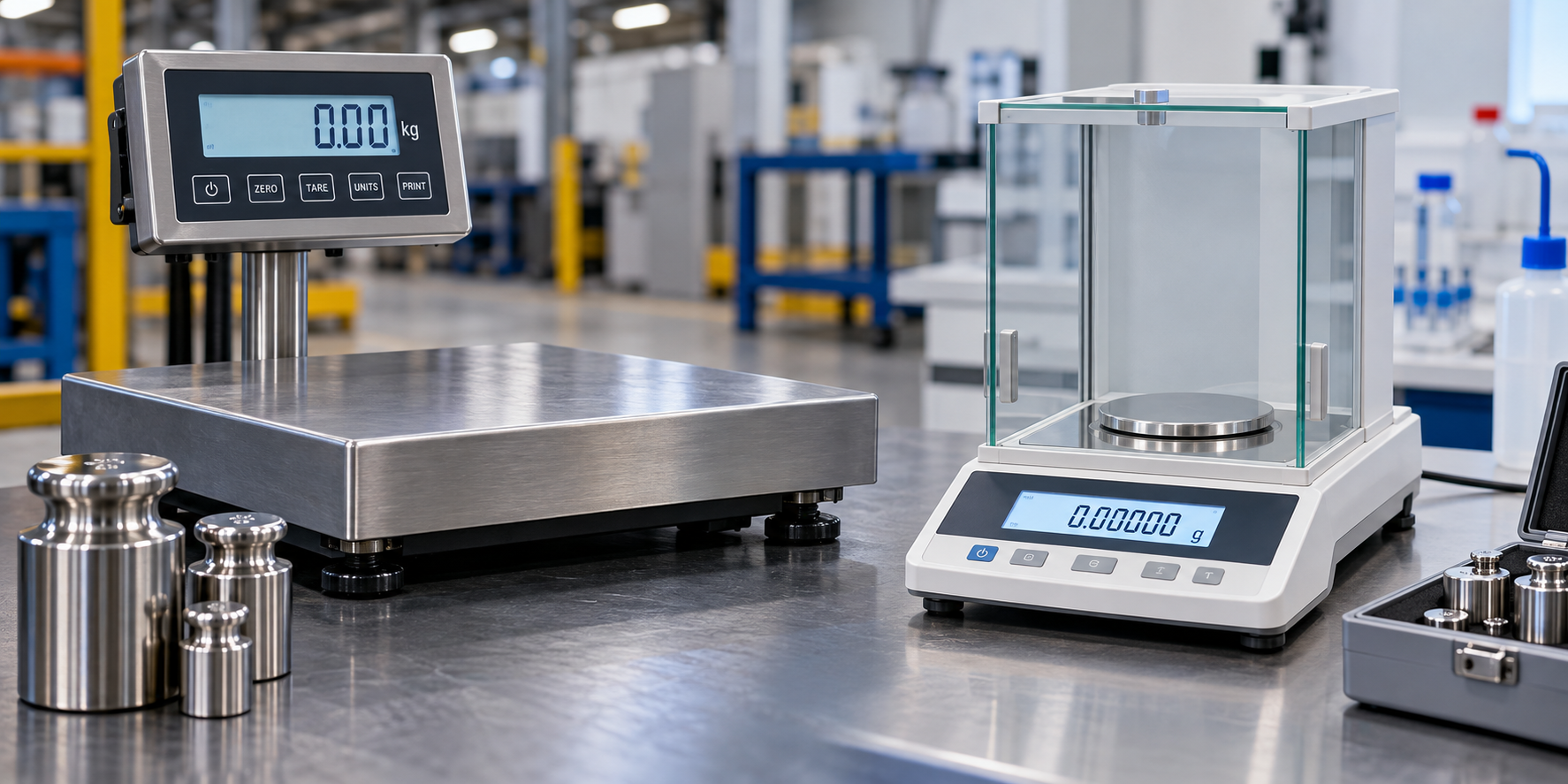
Scales and balances are weighing instruments used to measure the weight of materials, components, products, samples, and other items, typically providing an indication in units of mass such as grams or kilograms. They range from industrial scales used for production and material handling to high-resolution balances used in laboratories, quality control, research, and manufacturing.
Modern electronic scales and balances typically use a load cell or other sensing system to convert an applied load into a displayed measurement. Depending on the instrument and application, weighing equipment may provide functions such as basic weighing, counting, percentage weighing, checkweighing, or other measurement modes.
Scales and balances are available in a wide range of capacities, resolutions, and physical configurations. Common examples include bench scales, platform scales and balances, floor scales, counting scales, precision balances, analytical balances, and laboratory weighing instruments.
Because scales and balances are often used to make production, quality, laboratory, and acceptance decisions, regular calibration provides measurement data needed to evaluate their performance and maintain confidence in weighing results.
What Is the Difference Between a Scale and a Balance?
The terms scale and balance are often used for similar weighing instruments, and there is not always a clear dividing line between them. The distinction is generally based on resolution, sensitivity, capacity, and intended application.
Scales are commonly used for higher-capacity or general-purpose weighing, while balances typically provide finer resolution and greater sensitivity for laboratory, quality, and other precision applications.
Higher resolution does not necessarily mean greater accuracy. The measurement performance of either a scale or balance depends on the instrument, its calibration, environmental conditions, and how it is used.
Common Scale and Balance Applications
SIMCO supports scale and balance calibration for weighing equipment used in applications including:
- Production and manufacturing measurements
- Parts and inventory counting
- Quality control and inspection
- Laboratory sample preparation and measurement
- Research and development
- Formulation and batching
- Checkweighing
- Material receiving and handling
- Process monitoring and control
- Product or component weighing
Scale and Balance Calibration Capabilities
SIMCO provides scale and balance calibration services designed to evaluate weighing performance, identify measurement changes due to use or environmental influences, and support traceable documentation for quality and compliance programs.
Depending on the instrument, application, and calibration requirements, services may include:
- Visual inspection and functional checks
- Calibration measurements at selected loads across the weighing range
- Repeatability evaluation
- Eccentric loading evaluation
- Zero and return-to-zero performance, when applicable
- Calibration using appropriate reference mass standards and established calibration procedures
- Adjustment, when authorized and supported by the instrument
- As-found and as-left results, when required
- Calibration certificates with measured values, measurement uncertainties, and traceable documentation
Calibration requirements can vary significantly based on instrument capacity, resolution, design, application, and required measurement uncertainty.
Why Scale and Balance Calibration Matters
Scale and balance performance can change over time due to normal use, mechanical wear, overloading, movement, contamination, component aging, or environmental conditions.
Higher-resolution weighing instruments may be particularly sensitive to temperature, air movement, vibration, leveling, and the stability of the installation location. These influences can affect weighing results even when the instrument appears to be operating normally.
Calibration helps support:
- Measurement performance: Provides measurement data that can be used to evaluate scale and balance performance against applicable requirements.
- Compliance and audit readiness: Provides traceable calibration documentation supporting quality systems, customer requirements, and regulated industries.
- Risk reduction: Helps identify measurement errors that could affect production, inspection, laboratory, or quality decisions.
- Operational confidence: Supports consistent weighing measurements throughout manufacturing, laboratory, engineering, and quality operations.
Calibration Service Options
SIMCO supports calibration programs through a range of service models designed to meet different operational, compliance, and turnaround requirements.
Depending on your equipment, service scope, and quality requirements, available options may include:
- In-Lab Calibration: Scales and balances calibrated through SIMCO’s ISO/IEC 17025 accredited laboratory network.
- Onsite Calibration: Calibration performed at the customer facility where available and appropriate for the equipment and service scope.
- Embedded Laboratories: Calibration support through dedicated laboratory operations at customer facilities.
- Managed Outside Services: Coordinated third-party calibration management for specialized calibration requirements.
- Pickup and Delivery: Local pickup and delivery available throughout many SIMCO service areas.
Explore Calibration Service Types
Industries and Applications We Support
SIMCO supports scale and balance calibration for organizations where accurate and traceable weighing measurements are important.
Common industries include:
- Aerospace and defense
- Pharmaceutical and life sciences
- Medical device manufacturing
- Electronics and semiconductor manufacturing
- Automotive and transportation manufacturing
- Industrial manufacturing
- Research and development laboratories
- Calibration and testing laboratories
- Quality assurance and inspection departments
Why Choose SIMCO for Scale and Balance Calibration?
- ISO/IEC 17025 accredited calibration services
- Calibration support for a wide range of scales, balances, and weighing equipment
- Calibration across multiple capacities and resolutions
- Calibration using appropriate reference mass standards
- Calibration certificates with measured values, measurement uncertainties, and traceable documentation
- As-found and as-left results available when required
- Metrological traceability to the SI, typically through NIST or other national metrology institutes
- Support for regulated and high-precision manufacturing industries
- In-lab, onsite, embedded laboratory, managed outside service, and pickup and delivery options, where available
- Asset management support through CERDAAC SIMCO Manager